
Author

Full name
Job title, Company name
%20(2).jpg)
For health app teams that have nailed wearable data integration, the next question is how to add a new layer of value that users can't get elsewhere, and lab report analysis is one of the most overlooked answers.
Blood panels, metabolic markers, thyroid levels, and hormone profiles are all vital lab tests that reveal what's happening inside the body at the biological level, which no wearable can detect. Users want to see that data: 65% of U.S. adults who were offered online access to their medical records accessed them, up from just 25% in 2014. Right now, that happens outside your app.
That's your next product opportunity.
Deloitte's 2026 US Health Care Outlook found that only 38% of US health care spending goes toward prevention, early detection, and well-being. To close this gap, digital consumer experiences are now a top strategic priority for health care organizations. Lab report integration sits directly in that value pool.
The features you will surface are up to you, but there are three main components you need to get started:
Document parsing and OCR. Extracting structured data, test names, values, units, reference ranges, and collection dates from documents that vary widely in format requires medical-specific OCR logic.
LOINC normalization. "Glucose, fasting," "FBS," and "Fasting blood sugar" are the same test, but a system that doesn't know that can't compare results across labs or over time. LOINC is the international standard that maps local lab codes to universal identifiers, enabling cross-lab comparison.
HIPAA compliance. Lab results are protected health information. Encryption at rest and in transit, access controls, audit logging, and BAAs with any third-party processors handling that data are non-negotiable. If you're serving European users, GDPR compliance applies too.
Once you have the data flowing, it's what you do with it that determines whether users open the app once a year or every week. If you connect lab data and wearables to an MCP layer and introduce a personalized AI health coach to your app, your users can ask questions and get contextual answers: Did their LDL improve after they started the new training program? Is their HbA1c moving in the right direction since they changed their diet? This kind of longitudinal, cross-data picture is only possible inside an app that holds both the medical and the lifestyle-related data.
The build-vs-buy decision here is worth examining carefully. Building this pipeline in-house is a multi-month engineering project. Pre-built lab report APIs reduce that timeline significantly and keep your team focused on core app features.
The most successful longevity platforms have built lab results into the user retention loop.
Function Health aggregates large-scale lab testing and uses AI to build a personalized health baseline and intervention plan for the user. This protocol gives users a reason to come back at a recommended time to repeat the tests to see if the treatment plan worked, and a reason to use the app between tests to track the lifestyle changes that should move the needle. InsideTracker, founded by researchers from Tufts and MIT, connects blood biomarkers to wearable data and generates recommendations across nutrition, training, and supplements, giving users a combined view of their health as well as a reason to come back, increasing retention.
User demand for this category is evident. Neko Health, a body scanning and preventive health startup aiming to provide personalized insights based on medical tests, surpassed 300,000 signups in its global waitlist by January 2026 and is opening its first US location in New York City this spring.
Lack of actionability is cited as a primary drop-off driver for period-tracking apps, with 72% of users stopping engagement within three months.
Estrogen, progesterone, FSH, LH, and AMH values are central to fertility tracking, menopause management, and PCOS monitoring, and femtech apps that incorporate these are leading the field.
Midi Health introduced diagnostic input directly inside its menopause and perimenopause platform, going as far as ordering blood work to clarify hormonal root causes, then feeding those results into personalized treatment plans, clinician consultations, and follow-up testing. This loop is what keeps users engaged: they're inside an active health journey, and the app is where all the information lives.
In October 2025, Oura launched Health Panels in collaboration with Quest Diagnostics. Users schedule a blood draw at one of 2,000 Quest locations through the Oura app, and results come back directly inside the app, connected to the sleep, readiness, and activity data the ring is already tracking. The lab results don't change your daily recommendations, but they explain them: a result showing elevated A1C sits next to your sleep trends and activity scores, so users can see what may be driving it. The lab result stops being a standalone number and becomes part of an ongoing health picture.
Performance apps have always tracked how athletes are training, but few track biology.
WHOOP Advanced Labs closes that gap: users order biomarker panels in the WHOOP app, go to a partner lab for the blood draw, and results are delivered inside the app alongside continuous strain, recovery, and sleep data. The key product decision is that results feed into WHOOP's daily coaching layer and actively change it. A high hs-CRP result translates into adjusted recovery targets the next day; elevated cortisol shifts sleep recommendations. Behavioral changes show up in daily biometrics first and in lab results over time, making progress trackable in both directions.
At the elite level, Biolyz partnered with Borussia Dortmund in a three-year agreement following a successful pilot during the 2024/25 German football (Bundesliga) season. Rather than annual blood panels, Biolyz uses non-invasive saliva testing with mass spectrometry to capture 100+ biomarkers at high frequency, providing the medical team with insights into players' inflammation, recovery, and readiness between matches. The club reported fewer injuries and better workload management; as a result, additional Bundesliga clubs have adopted the platform, with a Premier League rollout underway.
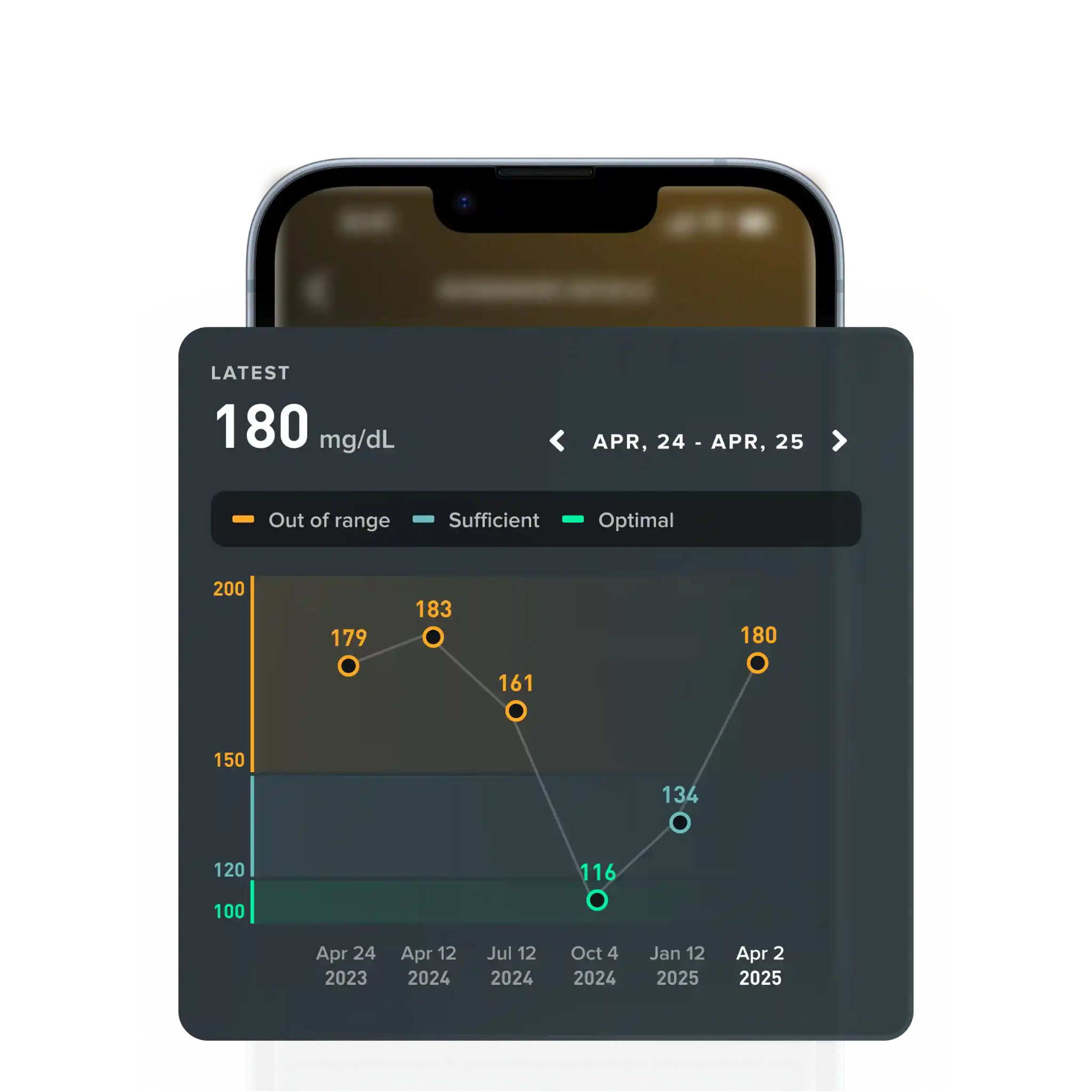
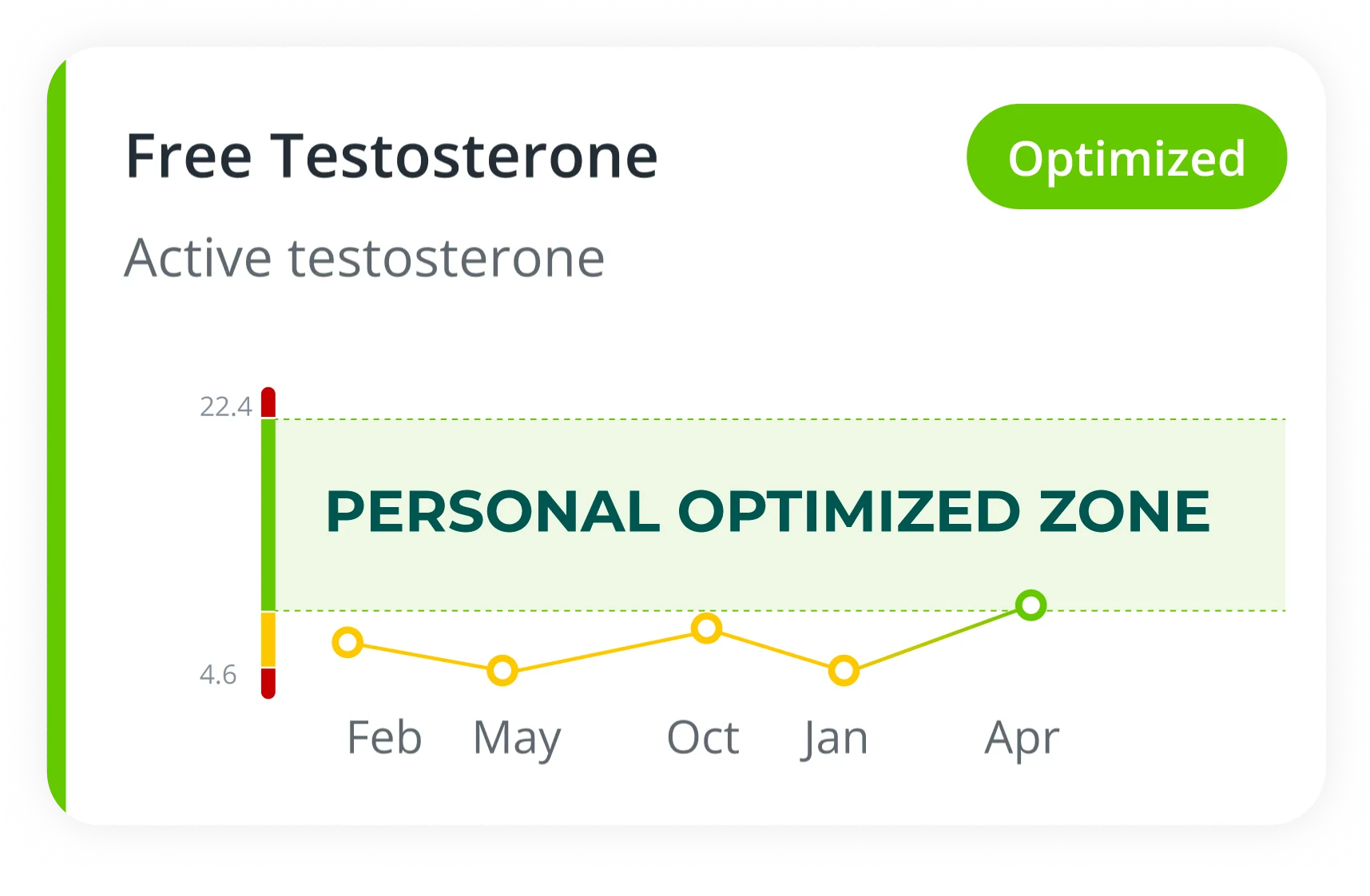
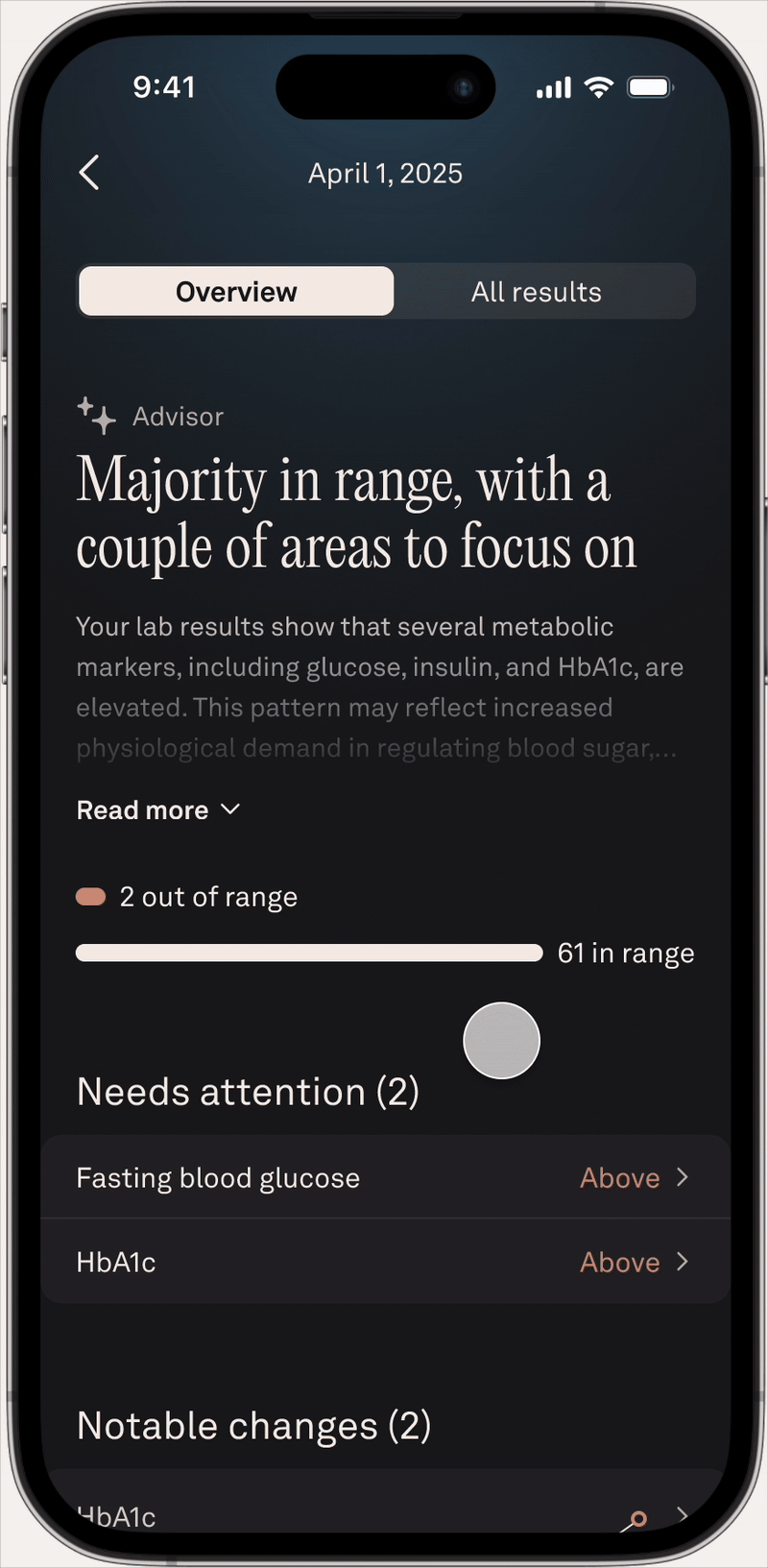
An app that displays numbers without context misses the retention opportunity entirely. The apps that do this well focus on three things:
Want to add lab analysis to your health app without the development overhead? Spike has it covered: our Lab Reports API handles OCR extraction, LOINC mapping, and multi-format parsing. It also connects directly with our Wearables API and Health AI layers, enabling contextual and personalized insights. Book a demo to see how it fits your stack.
A blood test API allows health applications to receive, parse, and structure lab report data, including blood panels, from documents uploaded by users or transmitted via EHR integrations. It handles extraction and normalization so lab results are queryable alongside other health data in the app.
LOINC (Logical Observation Identifiers Names and Codes) is the international standard for identifying lab tests and clinical observations, maintained by the Regenstrief Institute. Mapping incoming lab data to LOINC codes ensures the same test is recognized consistently regardless of which lab ran it or how it was labeled, enabling longitudinal comparison.
Context-first: show where a value sits within its reference range, how it's trended over time, and what it means alongside other health data already in the app. Longitudinal trends and plain-language summaries drive engagement more reliably than clinical notation.
Yes. Lab results are protected health information. Any app that stores, processes, or transmits lab data must implement encryption, access controls, audit logging, and ensure any third-party processors are covered under a Business Associate Agreement.
%20(1).png)
%20(1).jpg)